


You might open an app just to check one thing. Maybe a video, or reply to a message, or look at one post.
Then suddenly, twenty minutes pass.
How did that happen?
There is Always Something New
One reason can be infinite scrolling. Instead of reaching the end of a page or video, you can keep scrolling and more content keeps on appearing.
That might sound like a small design choice. It isn’t
The American Psychological Association (APA) has identifies endless scrolling as one feature that can make it harder for young people to stop scrolling as one feature that can make it harder for young people to stop using social media. For some people, there is no simple obvious moment that tells them “You’re done.”
So they scroll again. And again. And again.
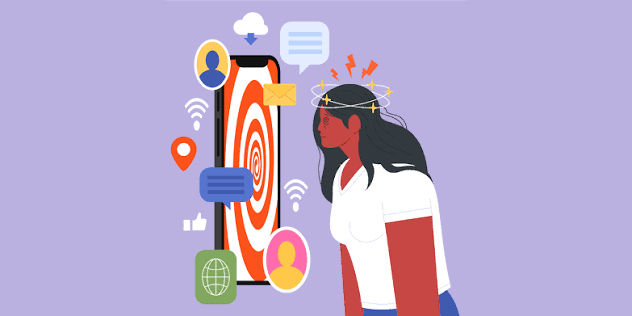
The Mystery of the Next Video
Have you ever thought, “I’ll just watch this one, and then I’ll stop”?
Then another video appears.
Features like auto play can make it hard to stop. When auto play is turned on, another related video automatically starts after the current video ends. The uncertainty of what will appear next can also make it tempting to keep checking.
Maybe the next video will be funny, or teach you something. Maybe it will be exactly what you were looking for.
There is always a “next.”
Your Feed Learns What You Like
Your feed usually isn’t random.
Recommendation systems can use signals from your activity to decide what content to show you. Most apps get their recommendation using information like your watch history, search history, subscriptions, likes, dislikes, and satisfation surveys.
The result is a feed that can become more personalized over time.
If you watch a lot of cat videos, you may see more cats.
The better the system understands you, the more relevant the next video might feel.
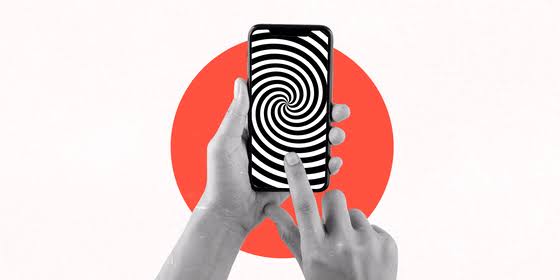
What Does an App Get From Your Attention?
Many free apps make money through advertising, while other apps use subscriptions, purchases, or different business models.
For advertising-supported platforms, keeping people engaged can have a real business value. More time and attention can create more opportunities to show advertisements.
This is part of what researchers and policymakers call the attention economy: people’s attention is valuable, and companies compete for it.
The U.S. Federal Trade Commission even held a 2025 workshop called “The Attention Economy: How Big Tech Firms Exploit Children and Hurt Families,” examining concerns about technology companies, children, and design features that can encourage people to stay online and return frequently.
But there is an important distinction.
That doesn’t mean every app is secretly trying to “trap” you.
Many platforms are designed to increase engagement—to help people keep watching, clicking, or coming back. Whether that becomes harmful depends on the platform, the person, the content, and how the features are used.
The Idea Behind Notifications
Your phone buzzes.
You check it.
A notification tells you someone posted something, replied to you, or that there is something new to see.
Even if you weren’t planning to open the app, now you’re thinking about it.
The APA has identified push notifications as another feature that can make it harder for young people to manage or reduce social-media use.
One notification may not seem important.
But what happens when there are dozens?
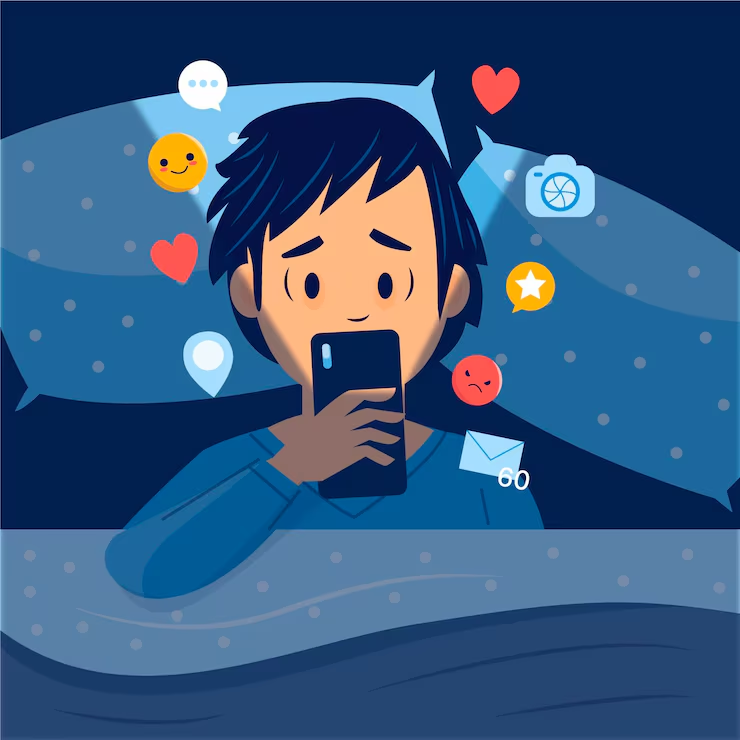
Why Is It So Hard to Stop?
There is another part of the story: our brains are still developing during adolescence.
The systems involved in impulse control and decision-making continue developing through the teenage years. This doesn’t mean teenagers have no self-control. It means that, in some situations, immediate rewards can be especially tempting.
Imagine having two choices:
Option A: Stop watching now.
Option B: Find out what happens in the next video.
Option B only takes one tap.
And that can make continuing feel easier than stopping.
Are Apps Trying to Make Us “Addicted”?
Researchers are still studying exactly how different social-media features affect young people. It would be too simple to say that every app is deliberately trying to make people “addicted.”
But certain design features can make it harder for some people to stop using an app.
Infinite scrolling.
Personalized recommendations.
Autoplay.
Notifications.
Likes and other forms of social feedback.
The APA has specifically called attention to features such as endless scrolling, recommended content, and alerts when considering how social media should be designed for young people.
So the question isn’t “Are apps trying to addict us?”
It is:
“How are apps designed to keep us engaged, and what happens when that engagement becomes difficult to control?”
Can We Design Apps Differently?
Apps don’t have to work exactly the same way.
Some apps give users controls for features such as Auto Play and Watch History. Users can turn off these features and affect recommendations.
That raises a bigger question:
Who should be responsible for making digital spaces healthier?
Should companies change their designs?
Should parents and schools teach better digital habits?
Should governments create rules?
Or should it be a combination of all three?
There probably isn’t one simple answer.
So, Why Are Apps Designed to Keep You Scrolling?
The answer isn’t simply, “Because apps want to make you addicted.”
It’s more complicated.
Apps compete for attention. Features such as recommendations, infinite scrolling, autoplay, and notifications can make it easier to keep using an app or return to it later.
For companies, keeping users engaged can be valuable.
For users, however, engagement isn’t always the same thing as enjoyment—or something you actually intended to spend an hour doing.
The next time you find yourself thinking, “Just one more video,” remember: the app may already have another one waiting.
You still get to decide whether to watch it.
And sometimes, the most important button on your phone isn’t “play.”
It’s “stop.”